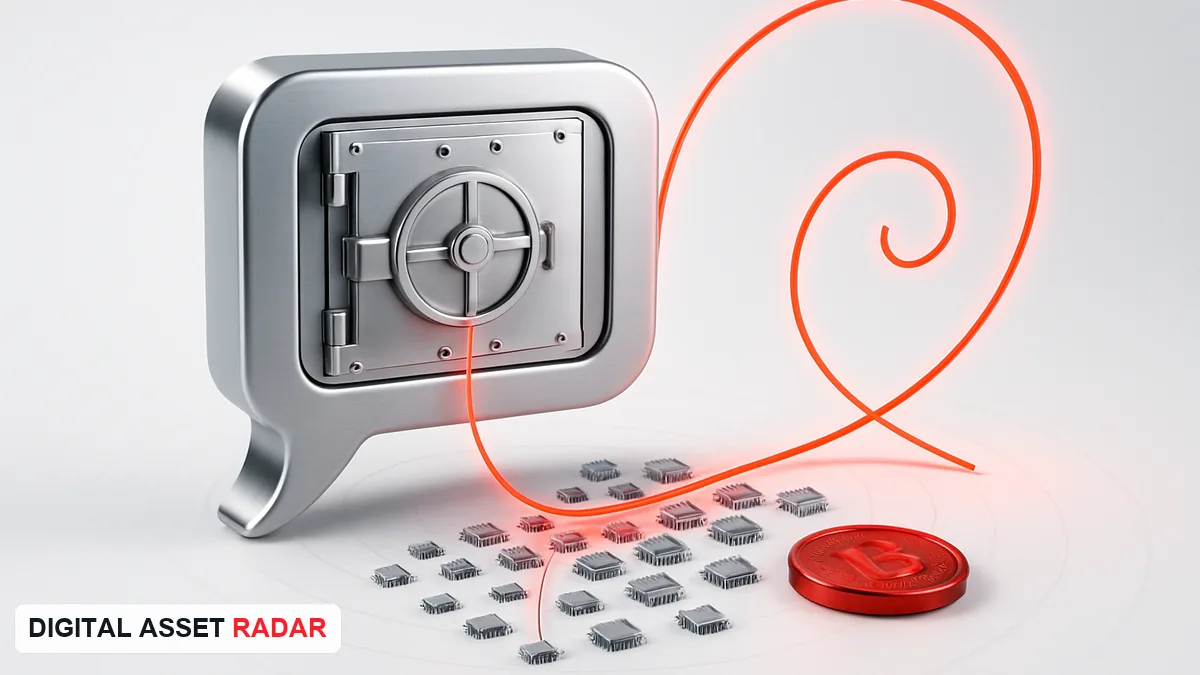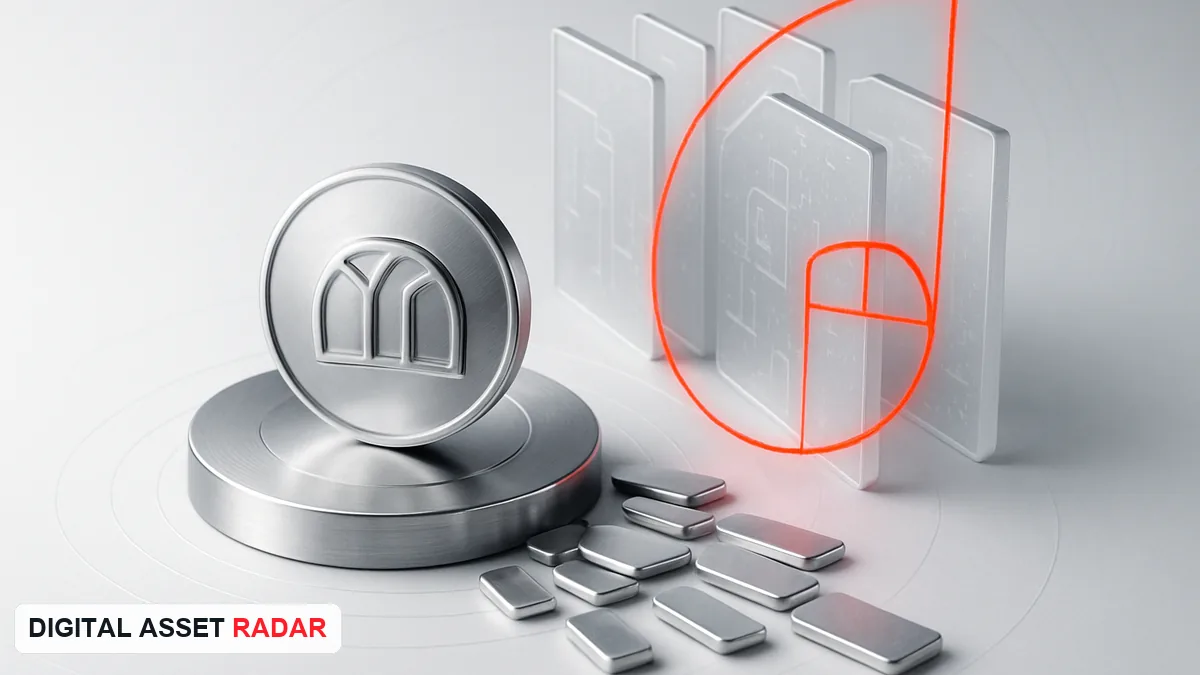
The VVV token is the native crypto asset of Venice AI, the private, uncensored AI platform founded by ShapeShift creator Erik Voorhees. Instead of paying per request, users stake VVV to unlock a permanent share of Venice’s AI capacity — turning a token holding into ongoing access to text, image and code generation. VVV is an ERC-20 token that launched on Coinbase’s Base network on January 27, 2025, and traded near $11.42 as of July 18, 2026, per CoinGecko data.
If you have looked at Venice AI and wondered what its token actually does — or whether “vvv token” is a coin worth owning rather than just a way to pay for a subscription — this guide breaks down the mechanics, the tokenomics, the price history and how to buy it, without the hype.
Key takeaways
- VVV is Venice AI’s utility and capital token, launched January 27, 2025 as an ERC-20 asset on the Base blockchain with a 100 million genesis supply.
- Its core function is staking for access: stake VVV and you receive a proportional, perpetual share of Venice’s AI inference capacity — 1% of staked tokens grants roughly 1% of API capacity.
- Staking a minimum of 100 VVV unlocks Venice Pro (effectively unlimited prompts) without a monthly fiat fee.
- The token has a deflationary design: annual emissions are being cut in stages toward 3 million tokens by July 2026, and monthly revenue-funded buy-and-burns permanently remove supply.
- VVV reached an all-time high above $21 in early June 2026 before pulling back into the low-to-mid teens; it trades on Coinbase, Kraken and Gate.
What is the VVV token?
VVV is the native token of Venice AI, a privacy-first platform that routes prompts to more than 200 open-source and proprietary AI models while storing no chat history on its servers. We cover the platform itself in depth in what is Venice AI; this guide focuses on the token.
The name and ticker come from Venice — “VVV” is styled as the platform’s monogram. It launched on January 27, 2025 as an ERC-20 token on Base, the Ethereum Layer 2 built by Coinbase, chosen for low fees and easy fiat on-ramps. At genesis, 100 million VVV were created. According to Venice’s launch announcement, 25 million were airdropped to more than 100,000 eligible Venice users and 25 million to AI community and protocol accounts on Base — including agent projects like Virtuals, aixbt and Luna — seeding the token across the on-chain AI ecosystem from day one.
How the VVV token works: staking for AI access
The mechanic that makes VVV different from a typical “AI coin” is that it is a claim on compute, not a payment for it. Rather than spending tokens per prompt, you stake VVV and keep it. Staking grants a proportional slice of Venice’s total AI capacity: hold and stake 1% of the staked pool, and you are entitled to roughly 1% of the platform’s API inference capacity, continuously.
For everyday users, Venice simplifies this into a threshold. Stake a minimum of 100 VVV and you get Venice Pro — the platform’s paid tier with effectively unlimited text prompts and advanced models — without paying the $18-a-month fiat subscription. You are, in effect, buying the subscription once as an asset you still own, rather than renting it monthly.
This design targets a specific audience: heavy API users, autonomous agents and applications that consume large amounts of inference. For them, staking to secure guaranteed capacity can be cheaper and more predictable than metered per-token billing.
VVV and DIEM: the two-token model
Venice runs a second token alongside VVV called DIEM, and the two work together. When you stake VVV, you can lock it to mint DIEM — a credit token where 1 DIEM is designed to represent roughly $1 of AI usage that can be spent across Venice’s models. VVV is the productive asset you hold and stake; DIEM is the consumable credit it generates.
The split matters because it separates ownership from spending. A holder keeps VVV as a long-term stake in the network’s capacity, while DIEM is the day-to-day fuel that flows to whoever is actually running prompts. It is an attempt to answer a question the whole AI-and-crypto field is wrestling with: how does autonomous software pay for compute without a bank account? We explore that broader shift in why AI agents need crypto rails.
VVV tokenomics: supply, emissions and burns
The genesis supply of VVV was 100 million tokens, but the design is deflationary over time through two opposing forces — a shrinking issuance schedule and active burns.
Emissions are being cut in stages. New VVV are minted to reward stakers, but the annual issuance rate is being stepped down deliberately — from an initial schedule of roughly 14 million tokens a year toward a planned 3 million tokens annually by July 2026. That falling emission curve reduces the dilution stakers face over time.
Revenue funds buy-and-burns. Starting in December 2025, Venice began using a portion of its platform revenue to buy VVV on the open market and permanently burn it every month. Because the burns are funded by real subscription and API income rather than token printing, they tie the token’s scarcity directly to the platform’s commercial traction — the more Venice earns, the more supply it removes. This is a rare case of an AI token backed by a profitable product; Venice reported profitability in the first quarter of 2026 with annualized revenue above $70 million, per its funding disclosures.
The combination — falling emissions plus revenue-funded burns — is meant to shift VVV from an inflationary launch phase toward a structurally scarce asset as the platform matures.
VVV token price history
VVV opened trading in early 2025 and, like most AI tokens, has been volatile. The token climbed through the first half of 2026 on the back of Venice’s user growth, reaching an all-time high above $21 in early June 2026 before pulling back. As of July 18, 2026, VVV traded near $11.42, according to CoinGecko — roughly the mid-point of its 2026 range.
Two things separate VVV from the broader “AI coin” pack when weighing that price. First, it has genuine product traction behind it: Venice surpassed 3 million users and turned profitable, so the token is attached to real revenue rather than a whitepaper. Second, its buy-and-burn removes supply using that revenue. Neither guarantees the price goes up — token prices are driven by speculation as much as fundamentals — but they give VVV a demand-and-scarcity story most AI tokens lack. That distinction reflects the wider compute-and-token dynamics we unpack in the AI supercycle in compute, energy and crypto.
How to buy the VVV token
VVV is listed on several major exchanges, so buying it is close to buying any mid-cap altcoin:
- Centralized exchanges: VVV trades on Coinbase, Kraken and Gate, with the VVV/USD pair on Coinbase carrying the most volume. You can fund an account by bank transfer, ACH or debit card and buy VVV directly.
- On-chain: because VVV is an ERC-20 token on Base, you can also swap for it on Base-native decentralized exchanges using a self-custody wallet holding ETH for gas.
- To use it, not trade it: move VVV to a wallet you control, connect it to Venice, and stake it (100 VVV minimum for Pro access) to convert your holding into platform usage.
As with any smaller-cap token, verify the official contract address through Venice’s own channels before buying on-chain, and treat AI-token prices as high-volatility — position accordingly.
Is the VVV token worth it?
Whether VVV makes sense depends on which of two people you are. If you are a heavy Venice user, developer or agent operator, staking VVV to lock in AI capacity can be a rational alternative to a monthly fiat subscription — you get the access and retain an asset that may appreciate. If you are a speculator, VVV is one of the few AI tokens tied to a profitable, growing product with a revenue-funded burn, which is a stronger fundamental base than most — but it remains a volatile small-cap subject to the same drawdowns as the rest of the sector.
The through-line is that VVV is Erik Voorhees’s bet that crypto tokenomics can finally monetize open-source AI at scale — a thesis rooted in the same self-sovereignty argument he makes about privacy, which we cover in Erik Voorhees on AI privacy and self-sovereignty. As of July 2026, the product side of that bet is working; the token side is still being priced.
Frequently asked questions
What is the VVV token used for?
VVV is Venice AI’s utility token. Its main use is staking: you stake VVV to receive a proportional, perpetual share of Venice’s AI inference capacity instead of paying per prompt. Staking a minimum of 100 VVV unlocks Venice Pro, and staked VVV can be locked to mint DIEM credits that represent roughly $1 of AI usage each.
What blockchain is the VVV token on?
VVV is an ERC-20 token on Base, the Ethereum Layer 2 network built by Coinbase. It launched there on January 27, 2025, with an initial genesis supply of 100 million tokens, 50 million of which were airdropped to Venice users and on-chain AI projects.
How much is the VVV token worth?
As of July 18, 2026, VVV traded near $11.42, according to CoinGecko. The token reached an all-time high above $21 in early June 2026 before pulling back into the low-to-mid teens. Like all AI and small-cap crypto tokens, its price is highly volatile.
How do you stake VVV on Venice?
Move VVV to a self-custody wallet, connect it to Venice, and stake your tokens through the platform. Staking at least 100 VVV grants Venice Pro access with effectively unlimited prompts, and larger stakes grant a proportionally larger share of API capacity — roughly 1% of staked tokens for 1% of platform inference.
Is VVV a good investment?
VVV stands out among AI tokens because it is attached to a profitable, fast-growing product — Venice passed 3 million users and turned profitable in Q1 2026 — and it uses platform revenue to buy and burn supply. That gives it stronger fundamentals than most AI coins, but it remains a volatile small-cap asset, so treat any position as high-risk.
Sources
- Venice Token price today, VVV to USD chart — CoinGecko
- Erik Voorhees’ AI platform Venice launches VVV token on Ethereum Layer 2 Base — The Block
- Claim and Stake Your Venice Tokens (VVV): A Complete Venice Airdrop Guide — CoinMarketCap
- VVV — The Privacy Coin for AI — Venice
- How to Buy Venice Token (VVV) in United States — Coinbase