Mining stocks are shares in companies that find, build and operate mines to extract metals such as gold, silver and copper — and because a miner’s costs are largely fixed while the metal price swings, their profits (and share prices) tend to move faster than the metal itself in both directions. That built-in leverage is the whole reason investors buy miners instead of, or alongside, the physical metal.
This guide, current as of July 2026, explains what mining stocks are, the four main types you can buy, how to invest through individual shares or ETFs, and the risks that make the sector one of the more volatile corners of the market.
Key takeaways
- Mining stocks are leveraged bets on a metal. When a metal price rises above a miner’s cost of production, the surplus flows almost entirely to profit — so a modest move in gold or copper can drive an outsized move in the stock.
- There are four main types. Major producers, junior explorers, and royalty/streaming companies extract or finance physical metals; Bitcoin “mining” stocks are a completely separate business that runs computers, not mines.
- Miners have lagged the metal — until recently. VanEck’s gold miners returned roughly 46% over the twelve months to mid-2026, more than double physical gold’s ~22%, according to Canadian Mining Report — a reversal of years of underperformance.
- Margins are near records. With large-cap all-in sustaining costs around $1,400–$1,600 an ounce against gold near record highs, low-cost operators can earn margins above $3,000 an ounce, per Discovery Alert’s 2026 fundamentals data.
- The risk is real. Operating leverage cuts both ways, and junior miners can fall 50–70% in a downturn. ETFs like GDX and GDXJ spread that risk across many companies.
What are mining stocks?
A mining stock is equity in a company whose business is extracting metals or minerals from the ground. When you buy the share, you own a slice of that company’s reserves in the ground, its operating mines, and the cash flow those mines produce.
The defining feature of a miner is operating leverage. A gold mine has a roughly fixed cost to pull an ounce out of the ground — the industry measures this as all-in sustaining cost, or AISC. If that cost is $1,500 an ounce and gold sells for $2,000, the miner keeps $500. If gold rises to $2,500, the cost barely changes but the profit doubles to $1,000. This is why miners are often described as a leveraged play on the underlying metal: the share amplifies the commodity’s move.
That amplification is the appeal and the danger. It works in reverse just as hard — if the metal falls below a miner’s cost, profits evaporate and highly indebted producers can face survival questions. Mining stocks are a bet on the metal and on management’s ability to control costs.
The four main types of mining stocks
Not all miners carry the same risk. Understanding the categories is the single most useful thing a new investor can do before buying.
Major producers (large-caps)
Major miners are large-cap companies that own and operate multiple producing mines around the world. As of April 2026, the three largest gold producers by market value were Newmont Corporation at roughly $124.7 billion, Agnico Eagle Mines at about $105.6 billion, and Barrick at around $69.7 billion, per data compiled by Metalorix and InvestSnips. These companies produce millions of ounces a year, hold proven reserves, and many pay dividends. They offer stability and scale but less explosive upside.
Junior miners (explorers and developers)
Juniors are the startups of the sector — small companies searching for new deposits or building their first mine. They usually generate little or no revenue and rely on raising capital. A successful discovery can multiply the share price many times over; a dry hole or a failed financing can wipe it out. In 2026, junior gold miners have led the sector: the junior-focused GDXJ ETF returned about 74% as speculative capital rotated back in, according to Discovery Alert.
Royalty and streaming companies
Royalty and streaming firms don’t operate mines at all. They hand miners upfront cash and, in return, collect either a percentage of a mine’s revenue (a royalty) or the right to buy future production at a fixed low price (a stream). This sidesteps direct exposure to labor disputes, cost overruns and capital spending. Franco-Nevada carries royalties and streams across 119 producing assets with over $1.2 billion in annual revenue, and Wheaton Precious Metals — the largest pure-play streamer — reached roughly C$97 billion in market value by February 2026, per Forbes and company data. Royalty companies are widely seen as the lower-risk way to own the sector.
Bitcoin mining stocks (a different animal)
Because “mining” appears in the name, searchers often lump in companies like Marathon Digital and Riot Platforms. These are not metal miners — they run warehouses of computers that validate Bitcoin transactions to earn newly issued coins. Their fortunes track the Bitcoin price and electricity costs, not gold. The gap can be extreme: the CoinShares Bitcoin Mining ETF (WGMI) returned about 243% over the year to mid-2026 even as spot-Bitcoin ETFs fell, per 24/7 Wall St. If your goal is exposure to precious or industrial metals, keep these separate. For the crypto side of that trade, see our explainer on why Strategy sold Bitcoin.
Why mining stocks are back in focus in 2026
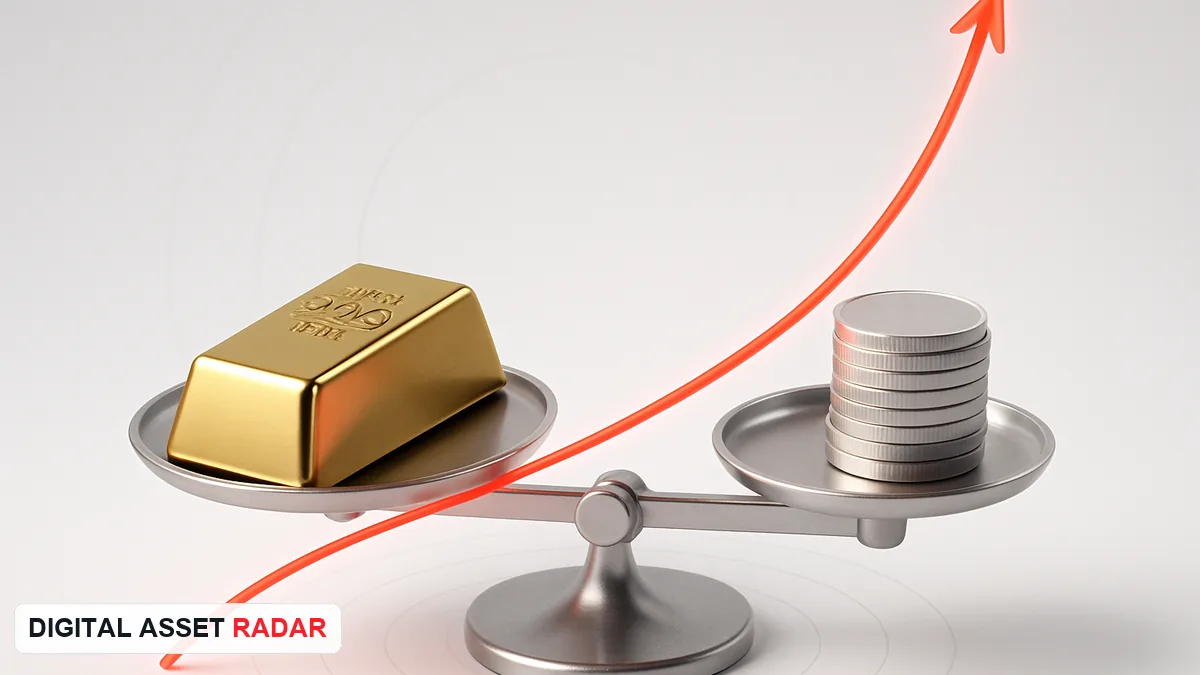
For most of the past decade, gold miners frustrated investors by lagging the metal even as bullion climbed. As of July 2026 that has started to change. VanEck’s gold miners delivered roughly 46% over the trailing twelve months versus about 22% for physical gold, according to Canadian Mining Report — the operating leverage finally showing up.
The engine is margin. Large-cap producers carry all-in sustaining costs of roughly $1,400–$1,600 an ounce, with Agnico Eagle among the lowest near $1,450, per SEC filings and industry data. With gold trading near record highs — above $4,500 an ounce through 2026 — analysts at Discovery Alert calculate that low-cost operators can now earn margins north of $3,000 an ounce, “historically exceptional” levels of profitability. When margins expand while share valuations stay depressed, the setup favors the equity.
This is the fundamental case that macro investors have been making all year. Azoria Capital’s Tavi Costa argues automation could turn the best mines into a decade-long arbitrage — we broke that down in Mining Stocks 2026: Tavi Costa’s Automation Thesis. It also sits inside a broader debasement story we’ve tracked through China’s move to a physical-gold settlement system: if central banks keep buying gold, the companies that produce it are directly geared to the trend.
How to invest in mining stocks
There are two practical routes, and most investors use some blend of the two.
Individual shares. Buying a single miner concentrates your bet. It rewards research — reserves, AISC, debt, management, jurisdiction — but exposes you to company-specific disasters like a mine flood, a permit denial or a botched acquisition. Majors like Newmont suit conservative investors; juniors suit those who accept high risk for a shot at outsized gains.
Mining ETFs. Funds spread risk across dozens of companies in one ticker. The most common are GDX (large-cap gold miners, ~0.51% fee), GDXJ (junior gold miners, higher volatility), SIL (silver miners, ~0.65% fee and about 27% more volatile than GDX per Motley Fool data), and COPX (copper miners). A frequent starter approach is a core position in a broad or large-cap miners ETF, with smaller “satellite” positions in juniors or a specific metal. Because the sector is cyclical, many investors rebalance on a fixed schedule rather than chasing moves.
Whichever route you choose, mining stocks are best sized as a portion of a portfolio, not the whole thing — their volatility is the price of their leverage.
The risks every mining-stock investor should weigh
Operating leverage is symmetric: the same math that doubles profits in a rally can erase them in a selloff, and silver and junior miners have seen peak drawdowns near 65%. Beyond price, miners face geological risk (the deposit is smaller or lower-grade than hoped), jurisdictional risk (taxes, nationalization, permitting), execution risk (mines run over budget and behind schedule), and capital risk (juniors diluting shareholders to raise cash). Royalty companies mute several of these, which is why they trade at premium valuations. None of it removes the core dependency: if the underlying metal falls and stays down, the whole sector suffers — a dynamic we saw play out in the 2026 silver sell-off.
Frequently asked questions
Are mining stocks a good investment in 2026?
As of July 2026, gold miners are enjoying record margins — costs near $1,400–$1,600 an ounce against gold above $4,500 — and have started outperforming the metal after years of lagging, per Canadian Mining Report and Discovery Alert. That makes the fundamental case strong, but the sector is volatile and cyclical, so it suits investors who can tolerate large swings and size positions accordingly.
What is the difference between gold mining stocks and buying gold?
Physical gold (or a bullion ETF) tracks the metal price one-for-one. A gold mining stock adds operating leverage: because a miner’s costs are largely fixed, profits rise and fall faster than the metal, amplifying both gains and losses. Miners also carry company risks — debt, bad management, mine failures — that a gold bar does not.
Are Bitcoin mining stocks the same as gold mining stocks?
No. Bitcoin miners such as Marathon Digital and Riot Platforms run data centers full of computers to earn Bitcoin; they don’t extract any physical metal. Their share prices track Bitcoin and electricity costs, not gold, and behave very differently from precious-metal miners.
What are the best mining ETFs for beginners?
The most widely held are GDX for large-cap gold miners, GDXJ for junior gold miners, SIL for silver miners, and COPX for copper miners. GDX is generally the lowest-cost and least volatile of the group, which is why many beginners start there before adding riskier junior or single-metal funds.
What does AISC mean for a mining stock?
AISC stands for all-in sustaining cost — the total cost to produce one ounce of metal, including mining, processing and sustaining capital. It is the key profitability metric: the wider the gap between AISC and the metal’s market price, the fatter the miner’s margin. Large-cap gold producers reported AISC around $1,400–$1,600 an ounce in 2026.
Sources
- VanEck Gold Miners ETF (GDX) — Yahoo Finance
- Top Analysts Believe Gold Mining Stocks Could Outperform Gold in 2026 — Canadian Mining Report
- Gold Miners Fundamentals: Record Margins and Earnings in 2026 — Discovery Alert
- VanEck Gold Mining Stocks: 2026’s Most Compelling Standout Trade (GDXJ) — Discovery Alert
- Largest Gold Mining Companies (2026 Rankings) — Metalorix
- The Top 10 Gold Royalty and Streaming Companies — Forbes
- GDX vs. SIL: The Pros and Cons of Gold and Silver Miner ETFs — The Motley Fool
- GDX vs. GDXJ: Do Senior or Junior Gold Miners Win the Gold Boom? — 24/7 Wall St.
- The Bitcoin Mining ETF That Returned 52% in One Week — 24/7 Wall St.